The Dear Fashion Journal… Alternative Perspectives on Style

I recently received a copy of Dear Fashion through the post… a gorgeous little publication put together in The Netherlands which charts the adventures of some of the folk involved in  a year of living without buying fashion, the Free Fashion Challenge. What follows below is my contribution to the journal – a prologue – a stage-setter for what is playfully shoehorned into the pages that follow. Dear Fashion is in essence a love letter to fashion, but one penned from different starting points and experiences. Read on…

“I love a vexing, thorny question. And perhaps there is no question in fashion today more troublesome – and overdue – than that of what fashion would be like outside an endless cycle of consumption. Let’s face it; our experience of fashion today is so dominated by buying stuff that it’s almost impossible to imagine fashion in any other format. Fashion is buying high street and high end. It is watching, shopping, purchasing. In the consumer society we organize our ideas about fashion around commerce and consumerism and end up becoming dependent on them. And yet this incessant cycle of consumption is not all that fashion is, was, or can be. We are, so to speak, shopping ourselves short. By elevating the power of what we buy to be the ultimate arbiter of fashion innovation; we are missing out on fashion’s other-than-market potential; on the multitude of fashion moments that flow from who we are, not from just from what we buy again and again. With consumerist fashion’s emphasis on looking from a distance, we are also straying even further from fashion’s original meaning – as a group activity of making and doing. And what is more, it seems that consumerism is creating an anachronistic form of fashion itself. For we know that fashion always reflects its context; and today its context includes sustainability. So when we see fashion as achievable only through ever-greater consumption; this blinkered ‘performance’ is quite simply, no longer fashion.

So much can be said about the detrimental effect of consumerist fashion on our society. Indeed these arguments need to be rehearsed and restated the world over: its contribution to the drawing down of resources and associated creation of waste; its promotion of short-term thinking and passive engagement with material goods; the psychological anxiety and stress linked to fashion’s instability, and so on. But what do we know about the effects of living without the consumer-based version of fashion? What experiences can we draw upon from other than this one-trick pony view of clothes-on-the-body? The answer begins to unfold inside the pages of this bookazine. With illustration, with words, with passion and a smile, so many possibilities are explored. Dear Fashion is an ode to what can be, to creation, expression, caring, repairing… so much more than consumerism’s ‘have it all’ culture.

I applaud all the Free Fashion Challenge volunteers who signed up to a year without shopping – you now have skills of the future, honed and perfected today. The ceaseless cycle of fashion consumption is ailing. Long live fashion.”

Alternative Fashion Systems talk at Parsons, NYC

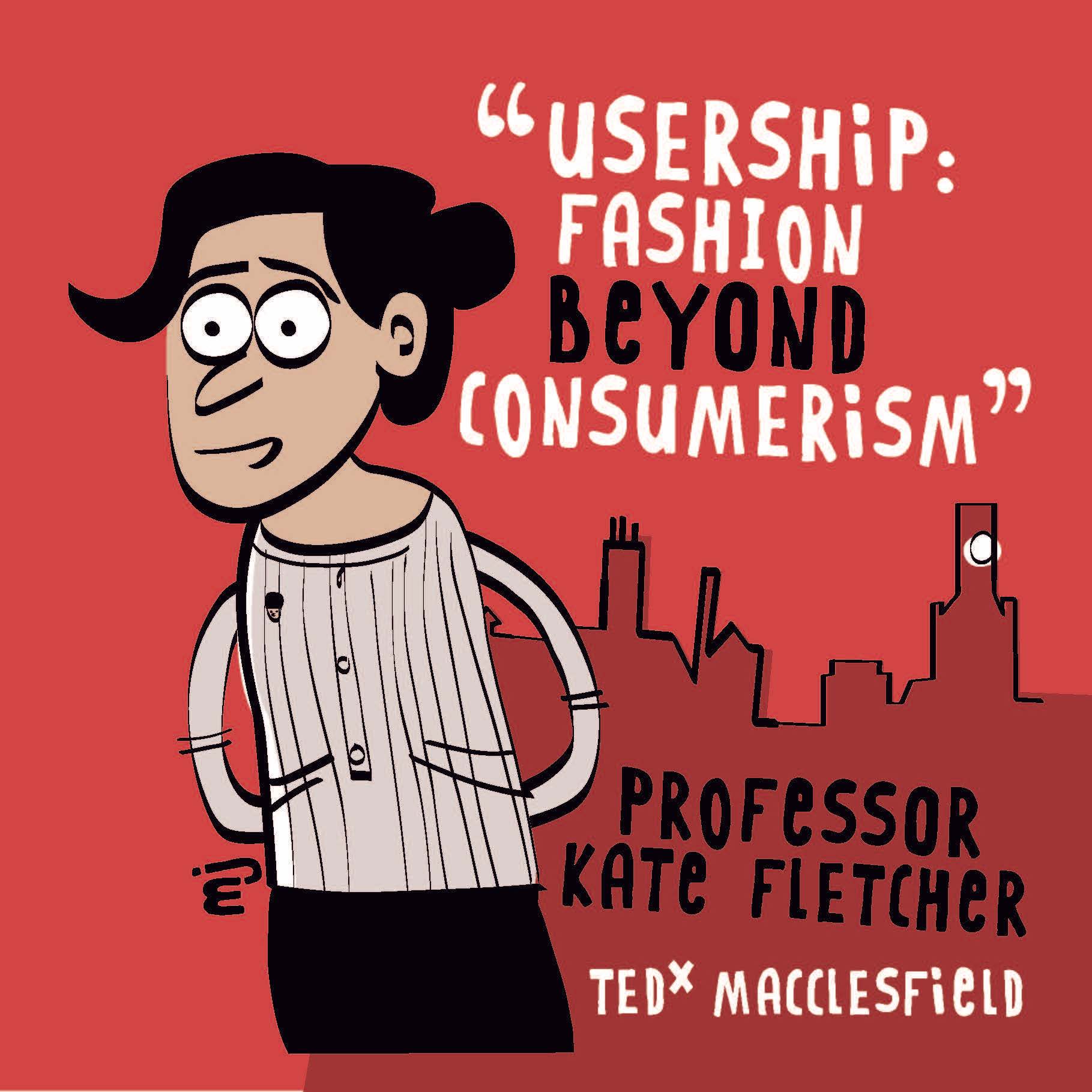
On Thursday 11th October at 6pm, I’m giving a presentation at Parsons the New School of Design on Alternative Fashion Systems.

I’m going to explore the effects of consumerism and economic growth on our fashion systems and investigate ways to value a broader range of fashion activity than is currently recognized, drawing upon examples of the ”craft of use” in my project Local Wisdom. I’ll touch on alternative ways to organize traffic in order to promote awareness, attentiveness and mobility, and will reflect on what this may mean for fashion, proposing alternative ideas around a new sort of fashion-ability.

Mend*rs Research Symposium

29th June – 2nd July, the Mend*rs Research Symposium in Docker, Kendal, the first ever large-scale gathering dedicated to mending in the UK. Fabulous.

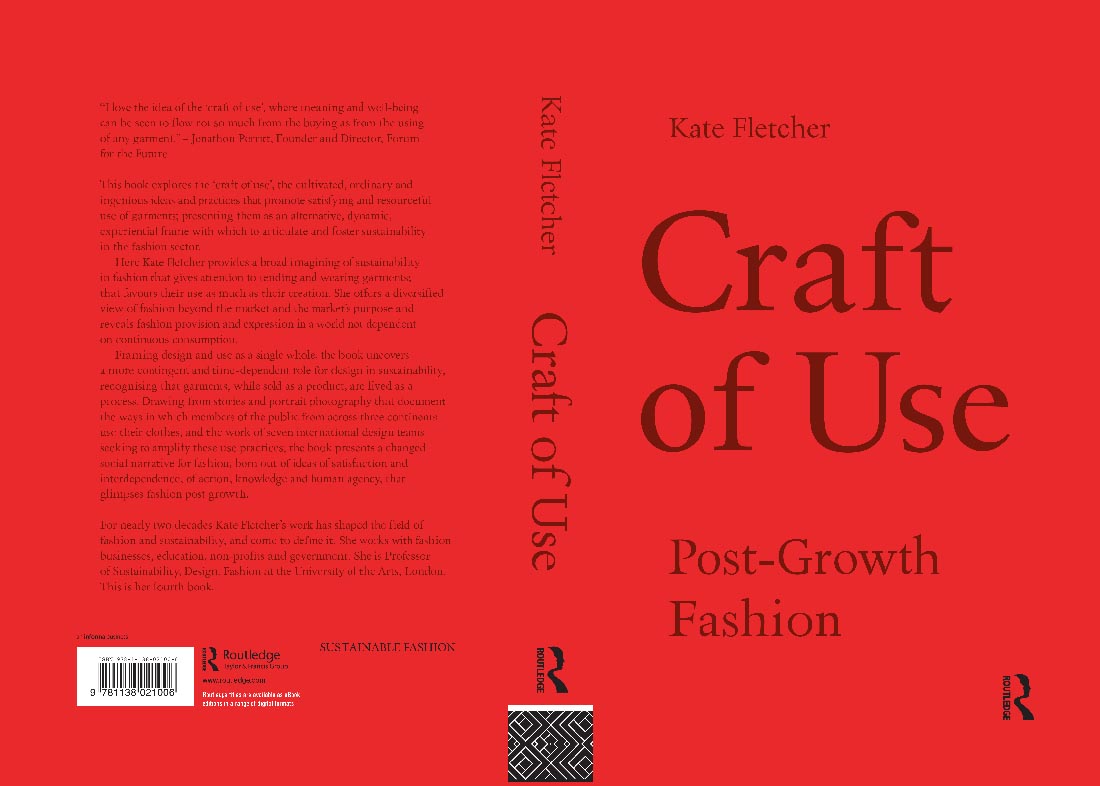
I’m speaking on Saturday 30th June about fashion experiences within the limits of the stuff we’ve already got: ’The Craft of Use’: Post-Growth Fashion.


Sharing, specialisation, sustainability

Over the past four years I have been gathering images and stories of – among many other things – garments that are shared. This has been part of Local Wisdom, a fashion research project exploring satisfying and resourceful ways of using clothes. Sharing – one of a broad suite of mechanisms of collaborative consumption (others include swapping, bartering, trading or renting access to products) – happens more often than we think. There will be very few among us who will not have borrowed a garment from a flatmate or sibling or who don’t have things that are shared through the generations, transferring their ownership as pieces are handed down within families and between friends.

Sharing makes sense in resource terms because one product can meet many people’s needs: we get more from less, more utility from fewer materials. Socially too, sharing also seems to enrich us, adding to our experience of clothes. Local Wisdom has captured stories of a husband and wife who share jumpers and shoes; six women from three generations of the same family who wear the same dress; and many other pieces whose sharing reinforces bonds and joint identity between the sharers, allowing us to gain access not just to more and different pieces but also to the values, histories and fashion expression of the owner.

So it would seem that promoting longitudinal sharing (passing down through generations to new owners) and latitudinal sharing (multiple users at one time) is a sustainability no brainer: it can help connect us to each other and to bigger environmental debates of resourcefulness. And yet it seems like many fashion and clothing brands, in a move which reflects both cultural conditions and today’s political economy, make a series of decisions, the effect of which is to actively reduce the likelihood of sharing and so lead us on a path away from sustainability.

If we can unclamp our imaginations and recognise that creating products which foster long term value in society more broadly actually benefits our businesses, then maybe we will stop sabotaging our sector’s prospects for sustainability

Ironically this happens at the same time as these same brands make overtures towards environmental protection typically through the pursuit of production efficiency. They substitute promising materials for damaging ones and pursue a ‘quality’ and recycling agenda. But they fail to realise that the way that people use their clothes offers potential to transform their brand’s sustainability profile in ways that a single-minded focus on materials and production never will.

Take the example of the Norwegian sportswear industry. Up until 2010 children’s sports clothing was mainly sold as unisex, its colour palette and fit largely androgynous. Then in 2010 this changed. Garments were designed in pink or blue and a gender dividing line was created in-store. Pretty much instantly sharing within families and between sexes was undermined. Garments became gender scripted and sharing potential restricted by half. Any hard-won gains with production efficiency were not just wiped out, but reversed at speed.

Certainly this raises many questions – including perhaps the most obvious and eternal one – why? The answer is complex and tied to, among other things, the economic logic of growth that seeks to open up new markets and intensify consumption rates in existing ones. It should also be understood against a backdrop of an already very substantial increase in sportswear consumption over the last 10 years, fuelled by increasing specialisation; a well known escalator of consumption. It seems like we are never satisfied – we find it hard to figure out how much is enough. Yet if we can unclamp our imaginations and recognise that creating products which foster long term value in society more broadly (such as sharing) actually benefits our businesses (because our businesses are dependent on a vital, flourishing society), then maybe we will stop sabotaging our sector’s prospects for sustainability. This is about seeing economic value as contingent on social value. Many people recognise the wisdom of this approach and design adaptable garments with inclusive scripts of use: unisex, unisize, multifunction, multiusers, trans-season etc. It is time we created value differently. Intensify and energise the process of use, not the practice of consumption.

Click here to find out more about how to cite this blog.

*The Square Project – a collection of unisex and transformable garments created by Anna Ebbesen, Benedicte Holmboe, Elin Sjøgren, Ruth Enoksen, Siff Nielsen,Tina Gabrijelcic and Mette Gliemann from Design School Kolding.

Consumerist fashion: innovation repressor

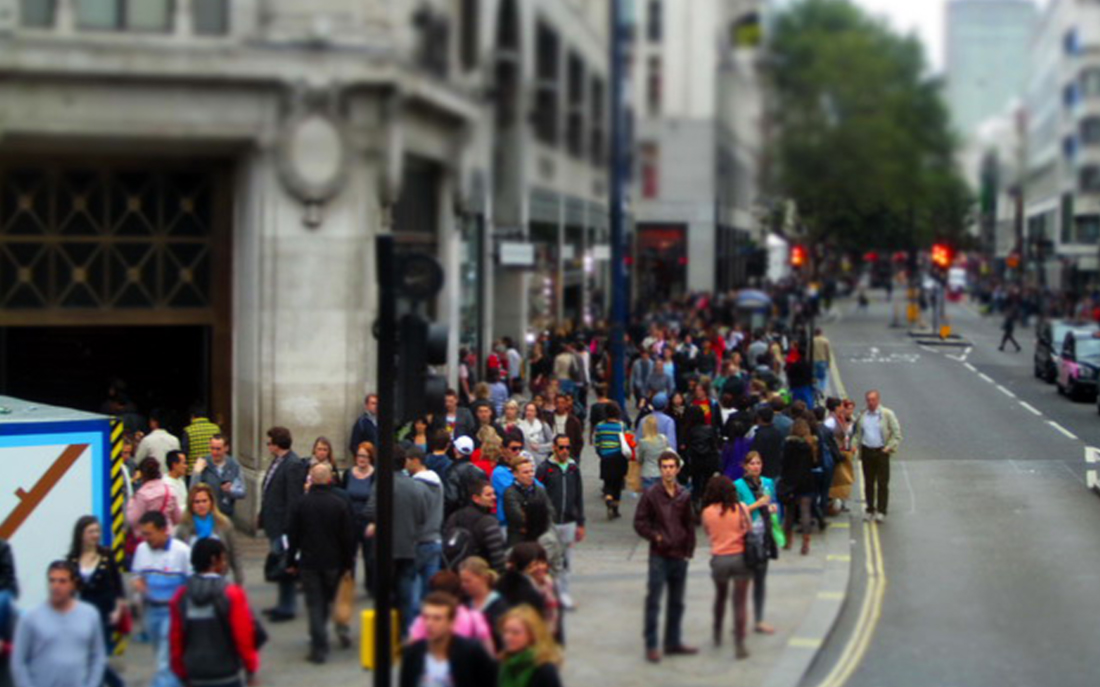
The language and expression of the consumer society in fashion is so overriding that we hardly notice it. In the collective cultural consciousness, fashion is consumption, materialism, commercialisation and marketing. It is buying high street and high end. It is watching, shopping, purchasing. The prevailing consumerist fashion style and story appears ‘natural’ to our way of thinking and behaviour: it is normal to access and engage with fashion primarily by exchanging money for product; it is expected that these same products will look dated and stylistically incongruous in six months; it is usual to discard rather than repair. It also appears that this state of affairs is freely chosen.

Dig a little deeper and we see other forces at play. It soon becomes apparent that consumerist fashion is locked into a cycle of self-justification, creating the very conditions by which it becomes both dominant and credible. We see an ever more rapid cycle of new product introduced in stores (up to 12 season per year and moving towards a strategy of continuous replenishment (Anson, 2010: 4)) because retailers compete on novelty. We buy poor quality items increasingly often because their inferior materials and construction means they fall apart quickly and need to be replaced. We grow our reliance on fashion that can be made into and traded as a commodity because the consumer society fails to value activities that can’t be marketed. In the consumer society we organize our ideas about fashion around commerce and consumerism and end up becoming dependent on them.

The domination of consumerist fashion within the fashion mindset means that alternatives are squeezed out. Other options seem unworkable.

Justin Williams (2010: 251), in his contribution to the excellent book ‘The Environmental Politics of Sacrifice’ calls upon Herbert Marcuse’s insights into the key factors which influence the governing story, technology, or ‘project of realization’ in society. It is, to paraphrase, all down to dominant interests. And the interests of the dominant parties favour one particular story and way of experiencing (in our case) fashion and; in the process of favouring one story these parties deny and reject others. The domination of consumerist fashion within the fashion mindset means that alternatives are squeezed out. Other options seem unworkable. In such a context, alternatives become seen, in Williams’ words as, ‘the booby prize’ (2010: 263), because cultural conditions create desire for the current set up and alternatives from outside the status quo appear inferior, impractical and unattractive. Indeed perhaps this explains why so much time and effort is spent making those alternatives that already do exist fit in with – look the same as, perform the same as – the way things are now.

Yet the key point here is that the status quo is not the only possible state of affairs. The prevailing system is the result of intentional, political choice and as such consumerist fashion is a power structure rather than an expression of our desire for dressing ourselves in commodity products. It is a way to expand the control of those with influence, not a reflection of fashion’s wider potential and practice. To return again to the arguments made by Justin Williams (in his piece, about cycling); consumerist fashion is not freely chosen by shoppers (its the only option), nor are the fashion alternatives freely ignored (they don’t know about them) (Williams, 2010: 256); instead it is dominant economic logic, business models, organisational structures and culture that dictate the prevailing view and experience of fashion – and refute alternative views. Seen thus, consumerist fashion not only damages the resource base, workers, consumers, etc., but also – and perhaps more insidiously – represses innovation; stifling anything other than that which benefits those invested in the status quo. To this, the response of those of us who love nature and the creative and cultural power of fashion and design can only be to invigorate innovation of these alternatives and develop a different plan of action. It is in this space of a different and varied plan of action where I situate my work. Join me.

Anson, R. (2010), End of the Line for Cheap Clothing?, Textile Outlook International, 147, 4-10.

Williams, J. (2010), Bikes, Sticks, Carrots in M. Maniates and J.M. Meyer (Eds.), The Environmental Politics of Sacrifice, Cambridge MA: MIT Press, 247-269.

Click here for information on how to cite this blog.